Methods and tools.
Proprietary instrumentation, on-site pilot rigs and analytical methods developed in-house — built to extend what the standard lab and a one-off spot sample can do.
CAPTIS
Portable sidestream device that returns the time-weighted mean contaminant level.
Jump to sectionPilot rig rental
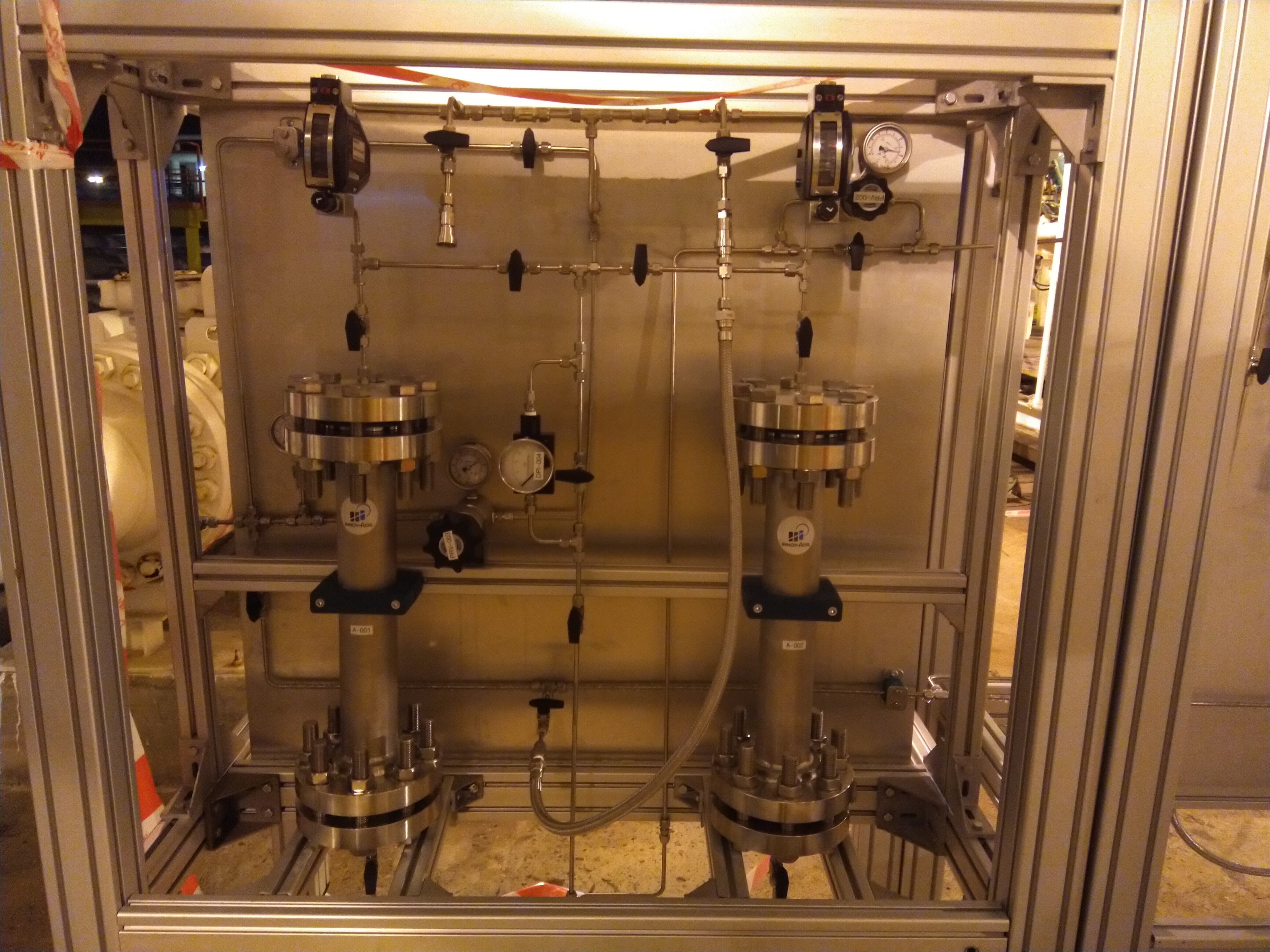
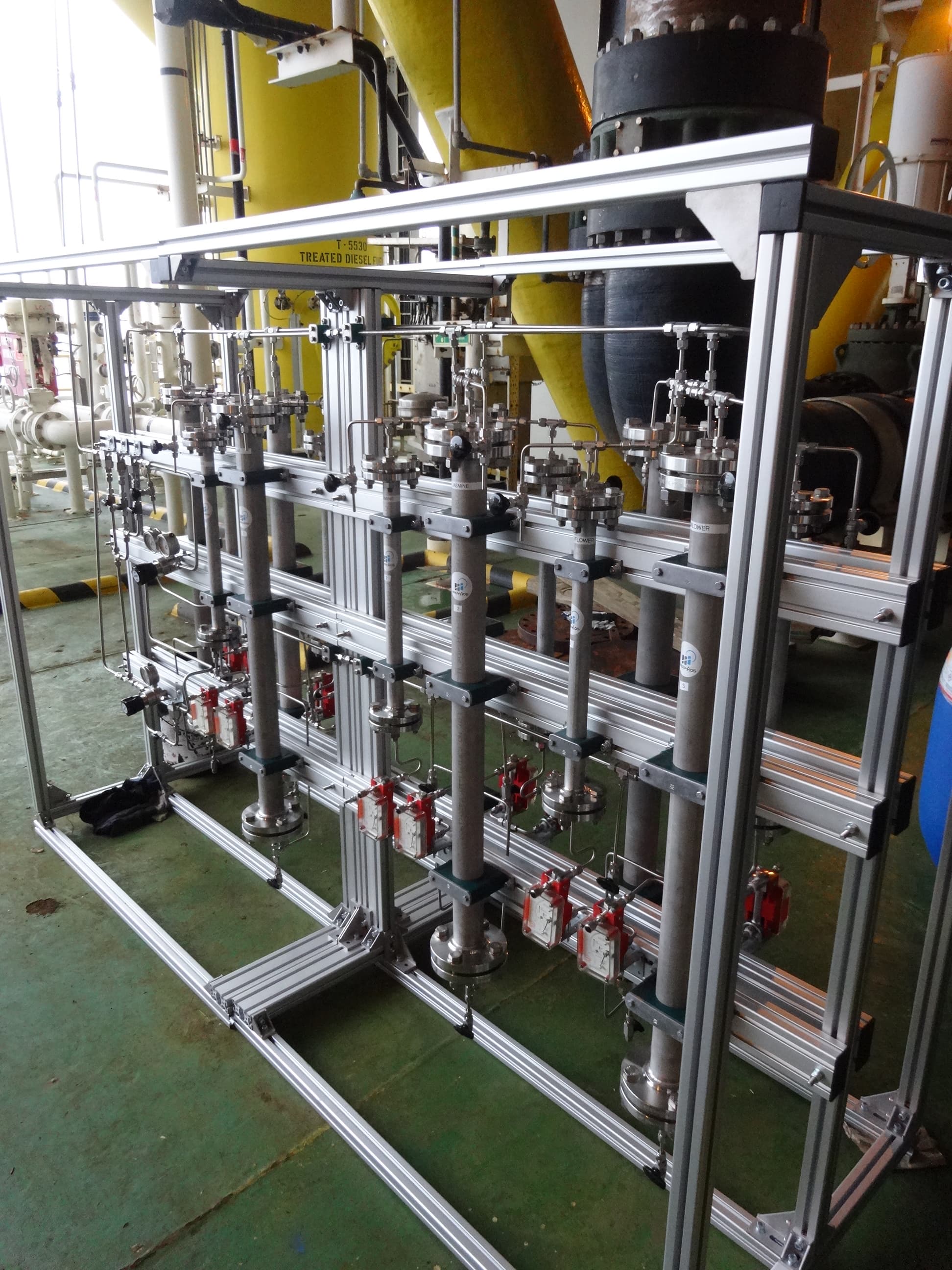
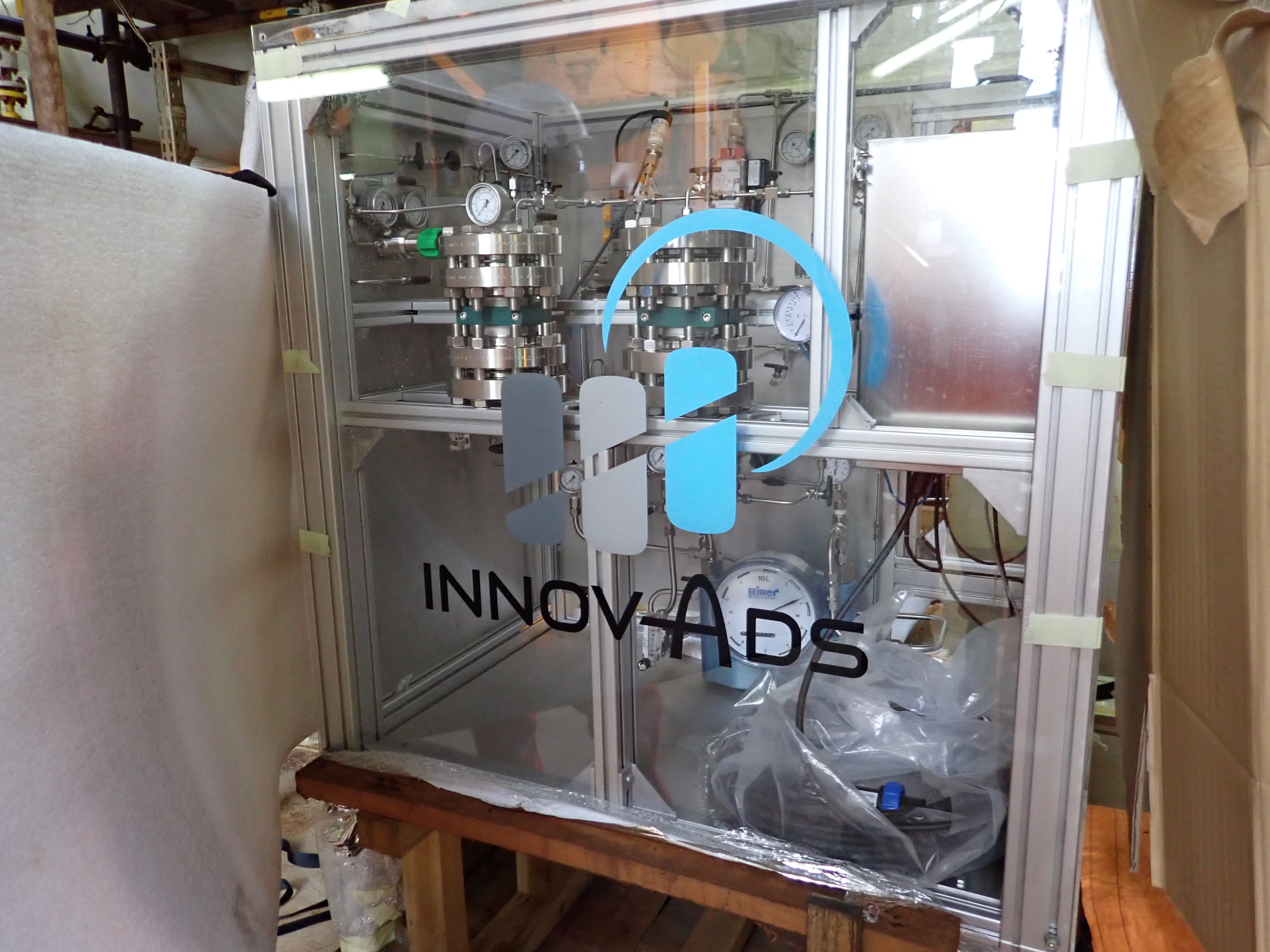
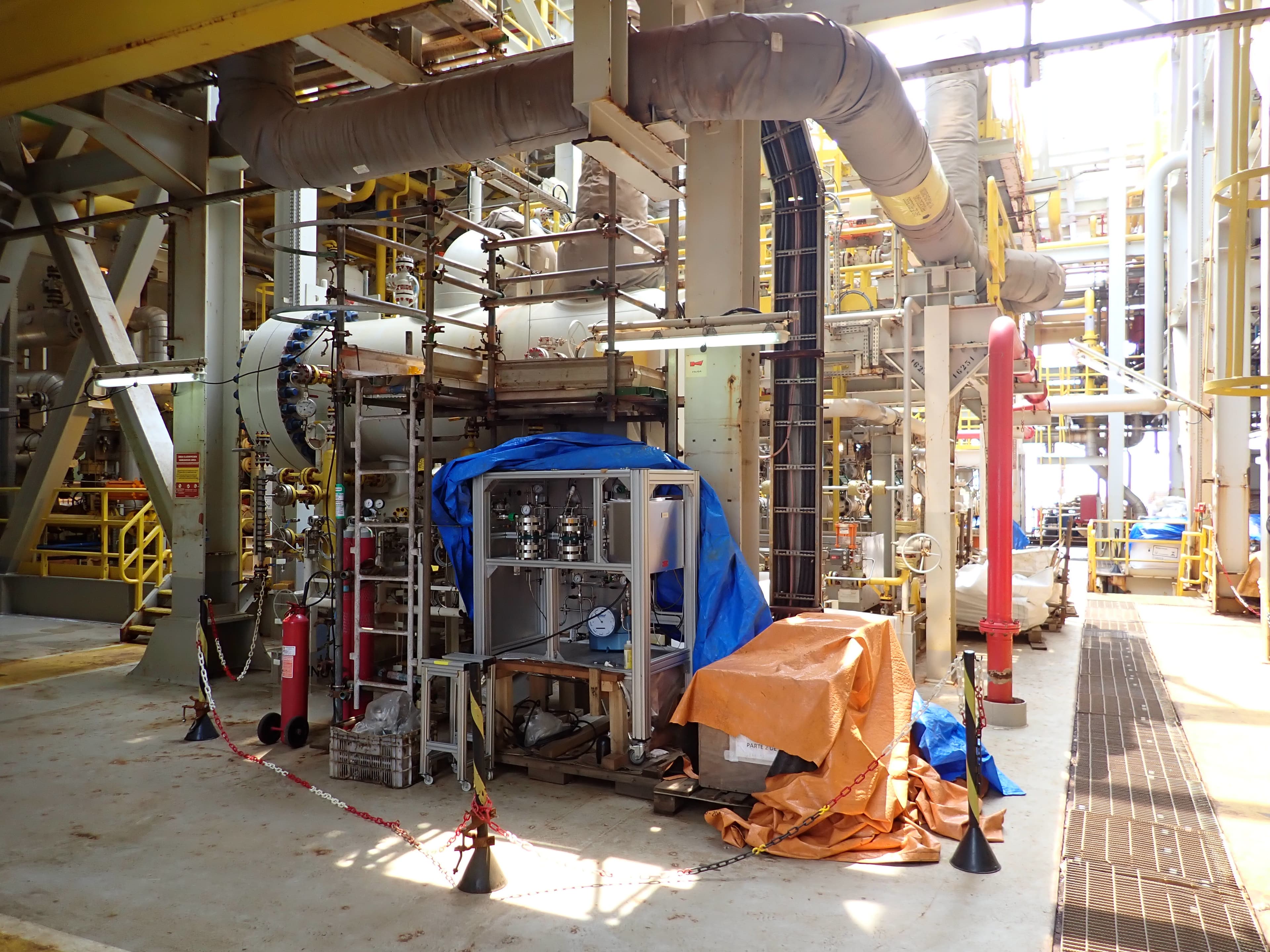
Pilot rig shipped to your site for a full testing campaign to validate performances.
Jump to sectionMethods & instruments
Standardised analytical methods and the lab instruments behind them.
Jump to sectionContaminant tracking tool · In development
CAPTIS
Contaminant levels in an industrial feed swing far more than a single spot sample can capture — yet bed sizing and lifetime predictions often rest on exactly that. CAPTIS is a portable device that taps a sidestream of the feed and lets target contaminants accumulate on its active phase over days to weeks. Retrieved and analysed in our lab, it returns the one number a snapshot can't: the true time-weighted mean concentration.
- Portabledeported device
- Plugs intoa process sidestream
- Accumulates overdays to weeks
- Retrieved &lab-analysed
Where it stands.CAPTIS is grounded in the trapping and back-calculation chemistry we already run day to day — the method is sound. We’re now moving the device into field validation and are looking for pilot partners to prove it on live units.
Pilot rig rental
When bench data isn't enough, we ship pilot rigs to your site. Our skids tap a sidestream of the operating unit for breakthrough campaigns, TSA/PSA cycling and resistance trials under your real conditions — rig, instrumentation and crew supplied for the duration, closing the gap between lab data and what the unit actually sees.
Methods & instruments
Standardised quantification protocols built around real client questions — each determination paired with the right sample prep and validated against industrial conditions.
Analytical methods — what we determine
Total mercury
Acid digestion + CVAAS — total Hg loading on spent adsorbents.
Mercury speciation
UOP 938 — elemental, organic and ionic Hg in liquid hydrocarbons.
Chloride
Alkaline digestion + potentiometric titration — total Cl loading on spent adsorbents.
Sulfur speciation
GC-FPD — H₂S, COS, mercaptans, thiophenes, PH₃, AsH₃.
Total carbon & sulfur
Combustion elemental analysis — coke and sulfidation severity.
Solid digestion
Acid, alkaline and microwave — sample-prep gateway for the determinations above.
Analytical instruments — what we run them on
- GC-TCDpermanent gases
- GC-FIDhydrocarbons
- GC-FPDsulfur species
- CVAASmercury
- Elemental analyserC / S
- Auto-titratorchloride
- NDIRCO₂, CO, H₂O
- UV-Visliquid-phase conc.
- Moisture probetrace H₂O
- TDLASsub-ppm trace gas
Why it matters
Methods that came out of real client problems.
Every protocol, instrument and tool on this page started as something a client needed that the standard lab could not deliver. Then it was validated, documented and added to the toolkit — built for use, not for show.
Talk to us about a method or tool.
If one of these fits a problem you're working on, or you'd like to become a CAPTIS pilot partner, get in touch.