

Technology testing.
Experimental performance evaluation and benchmarking across technologies — under conditions representative of the industrial process.
Performance
Characterisation, thermodynamic & dynamic testing — fresh and field-recovered material.
Jump to sectionEvolution
Liquids entrainment, hydrothermal aging, active phase stability and TSA/PSA cycling.
Jump to sectionBenchmarking
Basket trials, product qualification, technology development for material manufacturers and operators.
Jump to sectionPerformance evaluation
Fresh and field-recovered material tested under the same protocol.
Standard characterisation
Visual inspection, mechanical resistance, bulk density, loss on drying — included in every campaign.
Application-specific tests
Saturation capacity, contamination assays, sorption isotherms — tailored to the contaminant and unit operation.
Fresh vs. spent comparison
Side-by-side measurement of new and field-recovered material to quantify real in-service performances.
Application packages
Mercury removal
- Saturation capacity
- CVAAS analysis
- Dynamic breakthrough
Sulfur removal
- H₂S/COS capacity
- Elemental analysis
- COS formation risk
Chloride removal
- HCl saturation (gas)
- Organic chloride (liquid)
- Guard-bed sizing
Dehydration
- Water sorption isotherm
- Hydrothermal aging
- TSA cycle performance
Carbon dioxide
- CO₂ isotherm
- Competitive water adsorption
- PSA and TSA aging
Hydrogen PSA
- Multi-component isotherms
- PSA cycling
- H₂ recovery KPIs
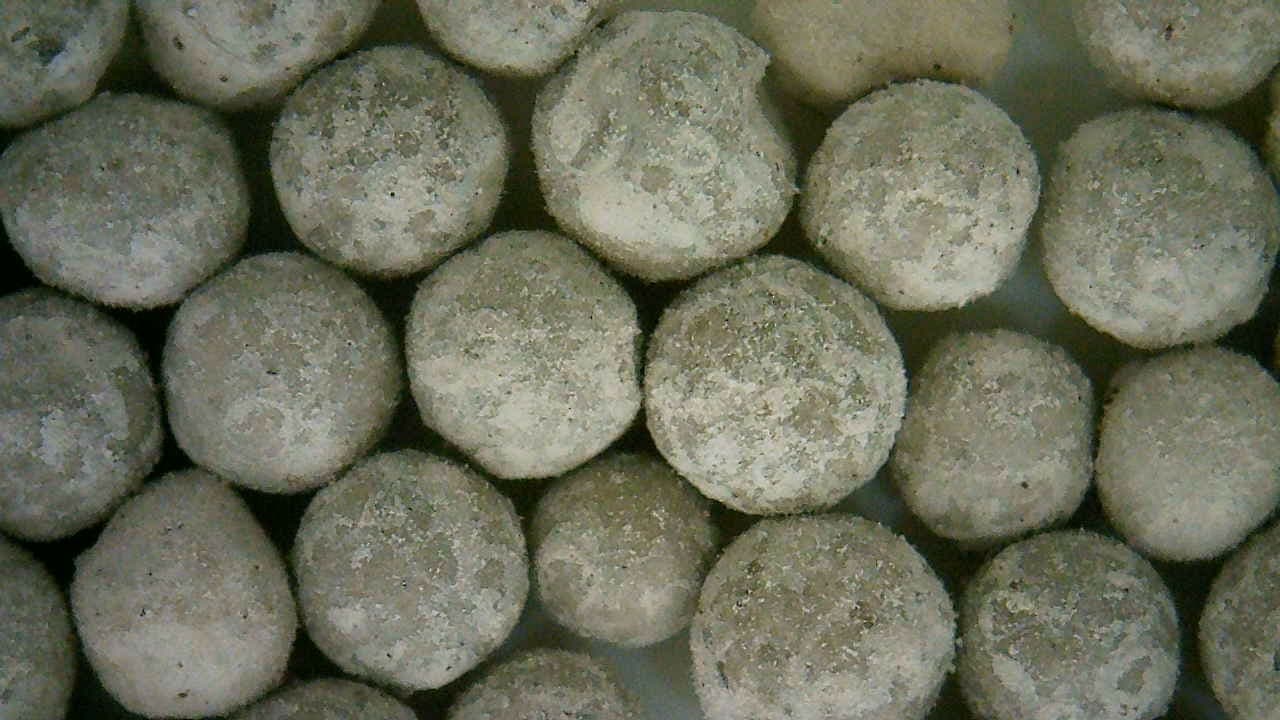
Evolution testing
Durability and stability protocols that track how performance changes through service cycles, liquid exposure and thermal stress.
Liquids entrainment
Mechanical integrity and capacity retention under liquid exposure — water, light and heavy hydrocarbons — replicating process upset conditions.
Hydrothermal aging
Repeated regeneration cycles under controlled temperature and steam partial pressure — capacity loss quantified via sorption isotherms before and after.
Active phase stability
Active phase retention and structural integrity through representative stress cycles — deactivation severity and remaining service life.
TSA/PSA cycling
Multi-cycle performance under representative swing conditions — capacity, attrition, and fines generation measured before and after the campaign.
Benchmarking
Independent campaigns where the value comes from running the same protocol across multiple materials or technologies. Independence is the precondition that makes the comparison commercially usable.
Basket trials
Comparative campaigns across multiple vendors — blind to the source, anonymised in the report, ranked by the same protocol applied to every sample.
Product qualification
Formal validation campaigns for material manufacturers entering a new market — protocols matched to the target application, deliverable usable as supporting evidence in qualification submissions.
Technology development
Selection studies for operators evaluating a new technology family — adsorption vs. catalysis vs. membranes vs. filtration compared head-to-head for a specific separation duty.
Why it matters
Numbers that survive contact with the unit.
Catalogue values come from idealised feed. Ours come from your feed, your cycles, your contaminants — measured fresh and after field service. That is the difference between data that wins a bid and data that holds up at the unit.
Have a material to evaluate?
Send us the scope, we'll come back with a test plan and timeline.